
Innocence Protected Me
To be a misunderstood child in a wretched world is no less than being a water lily at the centre of a deserted land.

Bones covered in dirt lay scattered across the barren land. The wind blows the dust up into a dust storm, dressing the skeleton-y bones in layers of dry grime. The usual warmth of the cool moonlight is replaced by piercing, icy coldness. At the centre of this endless, wretched land, blooms a pink water lily. There is no reason for it to be there. There is not a drop of water in sight. But somehow, it blooms strong, soft and vibrant, its presence offering a glint of warmth, powerful enough to envelop and destroy the overwhelming coldness.
To be a misunderstood child in a wretched world is no less than being a water lily at the centre of a deserted land.

Children deserve love. There is no two ways about it. Their purity and innocence is so immensely powerful but yet so fragile that its only love that is capable enough to protect and nurture it. If you misunderstand them, this power of innocence can turn into a violent poison, destroying not just the people around them, but also themselves.
I was one of those very misunderstood children, and my innocence has somehow both protected and destroyed me at the same time.
I was different. My qualities, traits, and liking didn’t fit the rigid gendered boxes set by society. While most boys expressed their rowdy boyishness in the football field, I loved staying inside, observing a beautiful doll, one of those fancy ones that sang as it twirled gracefully.
My family loved me, but as a result of being misunderstood, the love came in acts of forceful discipline. I was shamed for being feminine. My family wanted me to be better and have a good life, and they did what they thought was right. But they didn’t know that my femininity was not a clothing that I could remove after a session of harsh words and scoldings.
My softness, a quality that had the potential to be nurtured into a strength, became my worst enemy. I could never hide it. Somehow my brain figured out ways to work around such situations. Lying became a norm. It felt like the most ideal tool. I could lie at home that I was going to play sports with the boys, but instead go to my neighbour’s house and entertain the new born baby. I was happy, my family was happy, the boys who didn’t want me there were happy, everyone was happy. But what began as a childhood tool for survival would become a destructive trait that ruined all my relationships as an adult. I would constantly lie to everyone because I was afraid of hurting other people with the truth. I was afraid that even the smallest of my mistakes will make people abandon me.
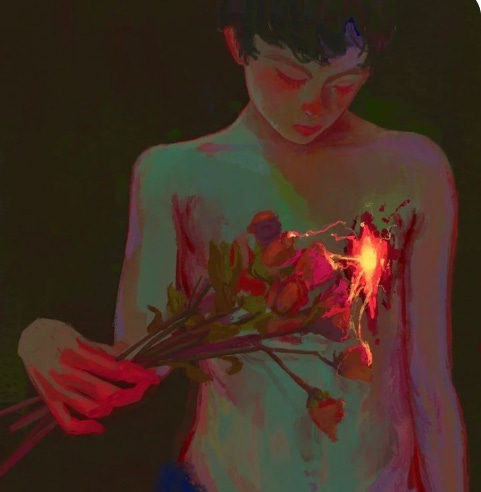
But its a trait that is long forgotten. I have worked hard to heal. To get out of this pattern, I had to realise that fear is a very destructive emotion. If you are a child who grew up being frightened of your own existence, then as an adult, it becomes something that can ruin your existence.
You become incapable of honest conversations, because you are so afraid of hurting others, you can’t speak up for yourself, because you are so afraid of offending people, you can’t say that you like something in the fear of people judging you. As a child, if you are afraid and can’t speak up, you will be considered “polite”, but as an adult, you become “irresponsible” and “incapable”. When the transition happens overnight, it becomes a little difficult to manage. Fear becomes a miserable rat nibbling at your heart. You need to kill the rat before it eats your heart whole.
Similar to the way my brain worked to survive such difficult childhood instances, it protected me from the trauma that sexual assault could have inflicted on me.
When traumatic incidents happen to you, your brain arrests development. All of its energy goes into protecting you, leaving no space for actual development. So you miss out on a lot of social skills that normal teenagers grow up learning and experimenting with.
Since my brain spent all its time in the department of survival, it failed in the area of reflection. My innocence took up its job, protecting me from not realising or critically reflecting on what had actually happened.
But it also destroyed me in some ways, if I had been able to reflect and realise what had actually happened the very first time it occurred, I could have stopped it right then and there. But I couldn’t, my innocence shielded me from both trauma and knowledge at the same time. The sexual assault went on for the next four years.
That must be the reason why when the disgusting auto rickshaw driver planted a kiss on me, I innocently mistook it for care. Simply because as a child, I was completely misunderstood, scolded, hurt, and desperate for care. So when I finally got some attention, I mistook it for affection. In that moment, the kiss didn’t feel so much as an inappropriate act, but as an act of care. To think that a kiss from a stranger is an act of care indicates how miserable life was for me, and my lack of ability to understand.
“If you don’t get love at home, you will start looking for it elsewhere.”
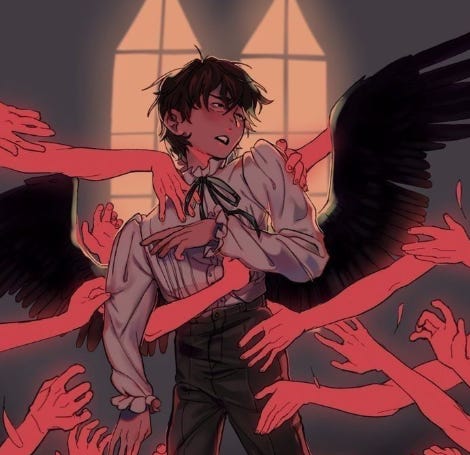
I haven’t been emotionally impacted by a lot of stuff that happened to me, simply because I could not reflect or understand or realise in that moment. Since I didn’t understand, the trauma couldn’t affect me. Now, as I am finally out of danger, my brain has left the department of survival, and moved on to the department of development. Since the trauma didn’t affect me, I have been able to move on easily, getting back to life in just a span of six months of official therapy.
I am currently in the process of turning my softness from an enemy to strength. Through all the difficulties and trauma, the softness remained. I am still as understanding, caring, and observant as I had been before. I just had to get the trauma out of me so that I could go back to being myself.
The water lily had been covered with dust for a few years. But when the dust finally lifted off, its faded colours shone again.
Amidst the wretched land, its softness burnt like fire.